Better Water. Better Service. Better Home.
Is Reverse Osmosis Water Safe to Drink? Why It Matters for Indianapolis Homeowners
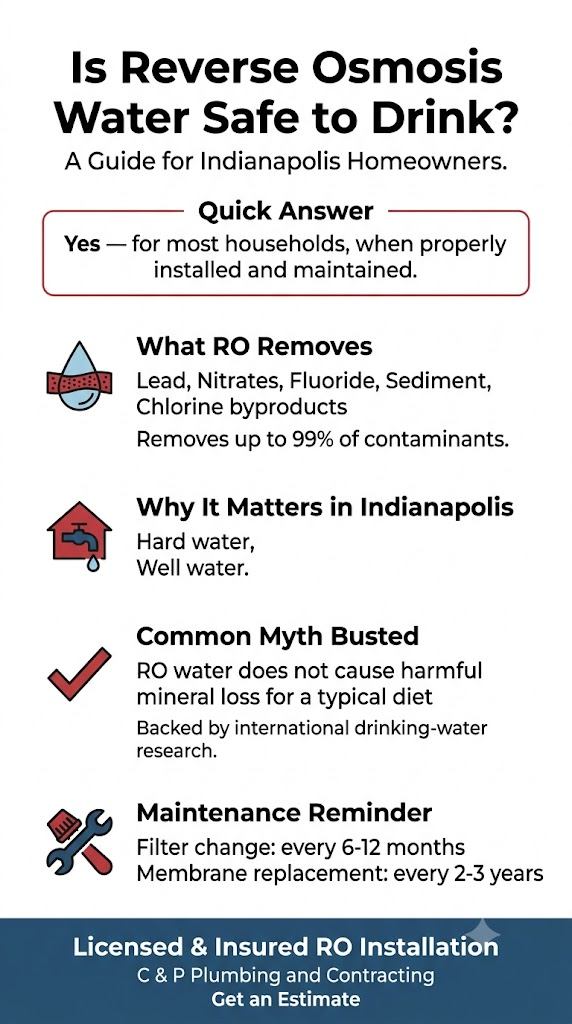
If you are asking if reverse osmosis water is safe to drink, the answer is generally yes when the system is properly selected, installed, and maintained. Reverse osmosis reduces many contaminants, but it also lowers mineral content, which can raise questions about everyday drinking water.
In this guide, you’ll learn what reverse osmosis removes, how it affects minerals, and what Indianapolis homeowners should consider before choosing an RO system.
Is Reverse Osmosis Water Safe to Drink? The Basics Explained
Quick Answer: Reverse osmosis pushes tap water through a semi-permeable membrane that blocks contaminants while letting clean water pass through, and EPA data confirms the process removes the substances that actually pose health risks.
Reverse osmosis water is safe to drink because the membrane inside the system physically blocks particles far smaller than the water molecules themselves.
According to the EPA Overview of Drinking Water Treatment Technologies, reverse osmosis and nanofiltration force water at high pressure through a semi-permeable membrane, physically removing contaminants rather than masking them.
This single mechanism explains why RO systems handle lead, nitrates, and fluoride more consistently than simpler carbon filters.
What Reverse Osmosis Actually Removes From Tap Water
A properly sized RO system removes up to 99% of contaminants, including lead, nitrates, and fluoride, along with sediment and chlorine byproducts that standard filtration misses.
Systems built to the EPA WaterSense specification meet the NSF/ANSI 58 performance standard for contaminant reduction, the bar most licensed installers use to judge a unit.
How the Filtration Process Works in a Home System
Household water pressure pushes tap water through several stages: a sediment filter, a carbon filter, the RO membrane, and often a final polishing filter. Each stage catches a different contaminant category, so the membrane never works alone, which keeps performance consistent over time.
Why RO Water Safety Matters to Indianapolis Homeowners
Quick Answer: Indianapolis-area homes deal with hard water, aging plumbing, and well-water contamination risks that make verified water safety a practical concern, not just a theoretical one.
The Cost and Health Risk of Ignoring Hard Water or Contaminated Well Water Locally
Homes across New Palestine, Fishers, Carmel, and the surrounding suburbs often deal with hard water that leaves mineral buildup in pipes and appliances. Homes on well water face added risks from iron, nitrates, and bacteria that municipal treatment never touches.
Ignoring these issues does not just affect taste. It shortens the life of water heaters, clogs fixtures, and leaves households drinking water that has never been checked for contaminants specific to their property.
The Benefit of Clean, Better-Tasting, Safety-Verified Drinking Water at Home
A correctly installed RO system gives a household direct control over water quality at the point of use, rather than relying on assumptions about the municipal supply or a private well.
Clean, better-tasting water becomes a daily outcome instead of an occasional convenience, and that outcome is measurable, tested, and repeatable rather than simply assumed.
Common Misconceptions About Reverse Osmosis Water Safety
Quick Answer: The two most common concerns about RO water, mineral loss and one-size-fits-all safety claims, do not hold up once you look at the research and local water conditions.
Misconception 1: RO Water Strips Essential Minerals From Your Body
Many people worry demineralized water pulls minerals from the body. The World Health Organization’s review of nutrients in drinking water found no confirmed health risk from low-mineral water, noting most people get minerals from food, not tap water.
Anyone relying mainly on water for minerals should ask a doctor.
Misconception 2: RO Water Safety Answers Are the Same Everywhere, So Local Water Conditions Do Not Matter
General advice about reverse osmosis often treats every household’s water the same way, but Indianapolis conditions are not generic. Hard water minerals, well-water iron staining, and regional groundwater differences change what a system needs to filter.
Matching the system to the actual water keeps the safety answer accurate for a specific address.
How C & P Plumbing and Contracting Helps With Safe Reverse Osmosis Water
Quick Answer: Licensed installation and honest, hands-on service are what keep a reverse osmosis system performing the way it is supposed to, year after year.
C & P Plumbing and Contracting’s Licensed RO Installation and Repair Process
C & P Plumbing and Contracting checks water quality and household usage before recommending a system size, then installs and pressure-tests the unit. One customer’s experience shows what that looks like in practice:
“Steve was nice enough to come out on a Sunday afternoon to help repair my RO system. He did a great job communicating when he would be out and was on time. He was respectful and courteous and put booties on before coming into the house. Figured out the problem and fixed it right away.
Was even available to answer questions after the job was done. I would recommend him.”
Credentials Backing Every Installation
C & P Plumbing and Contracting holds Indiana Trade License PC12400172 and carries a BBB Accreditation with an A+ rating, backed by more than a decade of experience serving the greater Indianapolis area.
Frequently Asked Questions
Q1. Is reverse osmosis water safe to drink every day?
Yes, reverse osmosis water is safe to drink every day for most households. Systems built to NSF/ANSI 58 standards support continuous daily use, and regular filter changes keep quality consistent.
Q2. Does reverse osmosis remove too many minerals from drinking water?
Reverse osmosis reduces mineral content, but research reviewed by the World Health Organization has not confirmed a health risk from this reduction for people eating a normal diet. Most dietary minerals come from food, not tap water.
Q3. How much does it cost to install a reverse osmosis system in Indianapolis?
Cost depends on household size, water conditions, and whether the system serves one faucet or the whole home. A free estimate from a licensed plumber gives an accurate number based on the property.
Q4. Is reverse osmosis water better than bottled water?
Reverse osmosis water is filtered to a comparable or higher standard than bottled water, without the ongoing cost or plastic waste of buying bottles.
Q5. How often does an RO system need maintenance?
Most residential RO systems need filter changes every six to twelve months and a membrane replacement every two to three years, depending on water quality and usage.
Conclusion
Knowing reverse osmosis water is safe to drink starts with choosing the right system for your home’s water quality and keeping it properly maintained. A professional assessment can help identify your water treatment needs and ensure the system is installed correctly.
C & P Plumbing and Contracting provides professional reverse osmosis installation for Indianapolis homeowners. Contact C & P Plumbing and Contracting today to discuss your water quality needs and request an estimate.