Better Water. Better Service. Better Home.
What Causes a Garbage Disposal to Leak From the Bottom, and Why It Matters for Indy Homeowners
Water pooling beneath your garbage disposal can indicate a leaking connection or a problem inside the unit, but the location of the puddle does not confirm the cause.
If you’re wondering what causes a garbage disposal to leak from the bottom, identifying where the water first escapes can help you avoid an unnecessary replacement.
In this guide, you’ll learn how to distinguish common leak sources, what information to share with a plumber, and when to consider repair or replacement. Indianapolis homeowners can use these details to understand their options before approving an estimate.
Confirm the source of the leak before deciding what to repair or replace.
What Causes a Garbage Disposal to Leak From the Bottom? The Short Answer
An apparent bottom leak can start at a connection above the base or at the disposal itself. Each situation calls for a different next step.
Water under a garbage disposal does not identify its own source. A mounting connection, discharge connection, dishwasher inlet, or neighboring pipe may leak onto the appliance. Water may also escape directly through the disposal body or motor joint. Finding the first point of escape tells you which part needs attention.
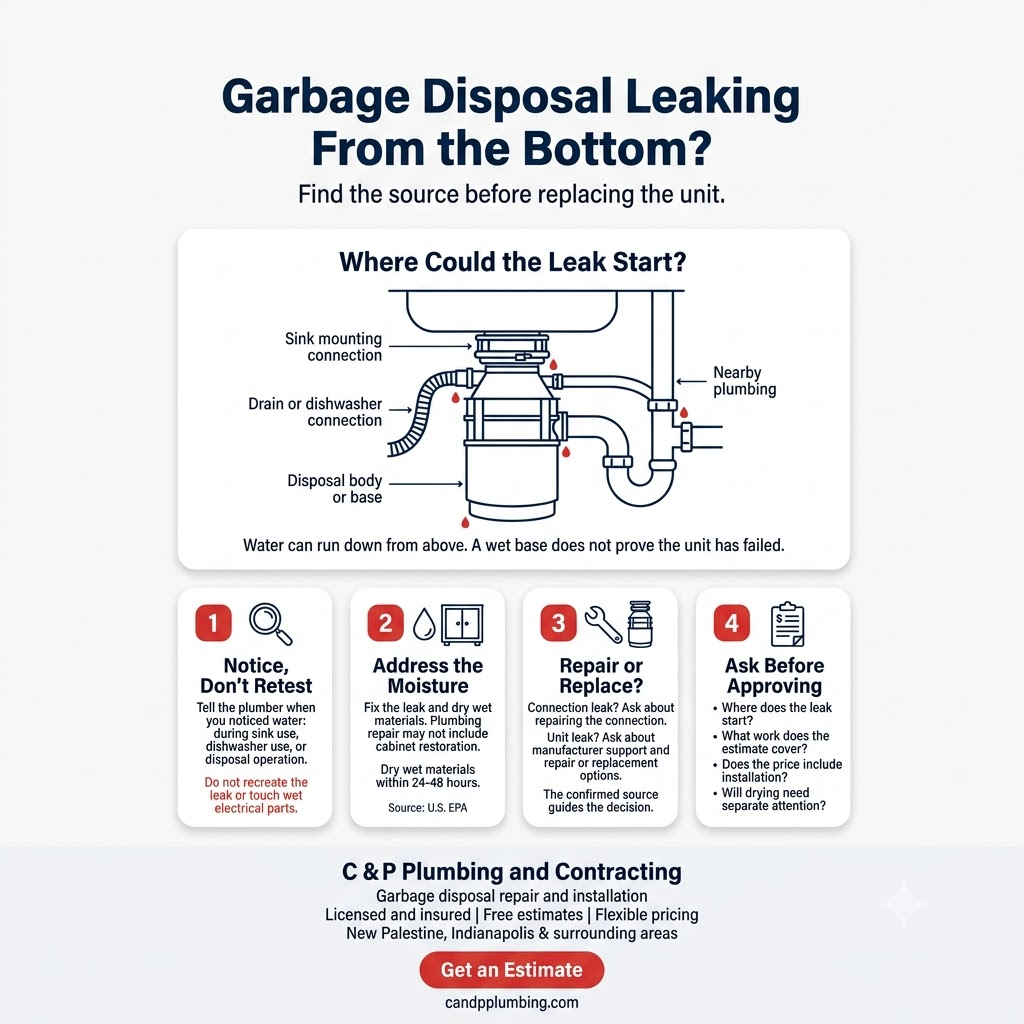
Where bottom leaks come from
The manufacturer’s support guidance separates mounting-assembly, discharge, dishwasher-inlet, bottom, container-body, motor-joint, and adjacent-plumbing leaks.
It also tells you to rule out water dripping down from elsewhere before you treat a bottom leak as a unit failure, as per the InSinkErator Garbage Disposal Leaking Support.
The mounting assembly holds the disposal beneath the sink. The discharge connection carries wastewater toward the drain. A dishwasher hose, when present, attaches at a separate inlet. A plumber separates these locations before recommending any work.
Confirm where the leak really starts before you decide
Note what you already saw: whether the sink was draining, whether the dishwasher had run, and whether the disposal was running. Skip any test that recreates the leak, and leave the appliance assembled.
Keep your hands away from wet wiring, plugs, and outlets. Tell the plumber if moisture reached any electrical part. Clear observations help the plumber start in the right place.
Why a Leaking Garbage Disposal Needs Attention Sooner Than You Think
Stopping the leak and drying the cabinet are two separate jobs, and finishing one does not finish the other.
What water in the sink cabinet can damage
A cabinet that stays damp needs attention even after the plumbing repair. Look over visible surfaces for staining or lingering moisture, and keep clear of wet electrical equipment.
Water-damaged areas and items need drying within 24-48 hours to help prevent mold growth, and homeowners should fix plumbing leaks promptly, as per the U.S. Environmental Protection Agency.
That guidance does not mean every disposal leak causes mold. It means the moisture source and the wet materials both matter. A plumbing estimate may not include cabinet drying or restoration, so ask what each estimate covers.
What changes when a licensed plumber looks early
An early inspection gives you a clearer basis for approving work. Ask where the water begins, which part needs attention, and what the estimate includes.
If the plumber recommends replacement, ask why a connection repair would not solve the confirmed problem. Ask separately about any drying or property repair, so you do not assume the plumbing estimate covers it.
Common Myths About a Leaking Garbage Disposal
Two assumptions often steer homeowners toward the wrong decision: treating the drip location as proof of failure and judging the problem by leak size.
Myth 1: “The leak means I need a new disposal.”
A wet base does not prove the disposal itself has failed. Water can reach the bottom from a higher connection.
Replacing a working disposal without fixing the real source may leave the leak in place. A confirmed leak through the unit calls for a different assessment than a loose connection. Ask the plumber for the finding that supports the recommendation.
Myth 2: “A slow drip can wait.”
A slow drip still deserves attention when the cabinet stays wet between uses. Leak size alone does not tell you which part has failed.
Watch whether moisture returns during sink use and whether the surfaces dry afterward. Share those observations with your plumber. They help describe the problem without assuming either that replacement is necessary or that the leak is harmless.
How C & P Plumbing and Contracting Fixes a Leaking Garbage Disposal
C & P Plumbing and Contracting offers garbage disposal installation and repair, along with kitchen plumbing troubleshooting and upgrades. You can ask the team to look at the disposal and the kitchen plumbing around it, so you do not have to guess which part needs work.
Garbage disposal repair and replacement from licensed and insured Indy plumbers
C & P Plumbing and Contracting is a family-owned, owner-driven company serving Indianapolis and surrounding areas.
Its plumbers are licensed and insured, and the company offers on-site assessments with upfront pricing and flexible pricing.
Ask what your estimate covers: a connection repair, the disposal, or neighboring plumbing. Compare two prices only when both estimates cover the same work.
What the visit looks like
Describe the visible leak when you request service, and ask what information would help the assessment. Report what you already noticed rather than running another leak test.
Customer Jennifer Archer-Spanel described a diagnostic visit in her Google review: “Diagnosed the issue WITHOUT a fee! Gave me the repair cost, and I accepted.”
Ask for an explanation of the source and the proposed work before you approve anything.
Frequently Asked Questions
These answers cover the decisions homeowners face before they book an inspection or approve work.
Q1. Can I keep using a garbage disposal that leaks from the bottom?
Leave the disposal unused while you arrange an assessment. Avoid sink or dishwasher use that keeps feeding the leak. Stay away from wet plugs, wiring, and outlets, and tell the plumber about any water near electrical parts before the visit.
Q2. Does a bottom leak always mean I need a new garbage disposal?
No. Water can travel down from the mounting assembly or another connection and drip from the base. Confirm the starting point before anyone recommends replacement. If the unit itself leaks, ask about the manufacturer’s support options and which repair or replacement fits that specific disposal.
Q3. Who can repair a leaking garbage disposal in Indianapolis?
C & P Plumbing and Contracting repairs and installs garbage disposals across Indianapolis and surrounding areas. Describe the problem when you request service so the plumber can consider the disposal and the connected kitchen plumbing together.
Q4. How much does garbage disposal repair cost?
The price depends on the confirmed problem and the work needed. Repairing a connection differs from installing a replacement disposal. C & P Plumbing and Contracting offers on-site assessments with upfront pricing and flexible pricing.
Conclusion
If you’re wondering what causes a garbage disposal to leak from the bottom, have a plumber confirm the source before approving a replacement. C & P Plumbing and Contracting provides garbage disposal repair and installation services in Indianapolis and surrounding areas, with on-site assessments and upfront pricing to help you understand your options.
Request an on-site assessment from C & P Plumbing and Contracting to identify the problem and find the right solution for your garbage disposal.